
By: Jennifer Gilligan, IntegraMSP President
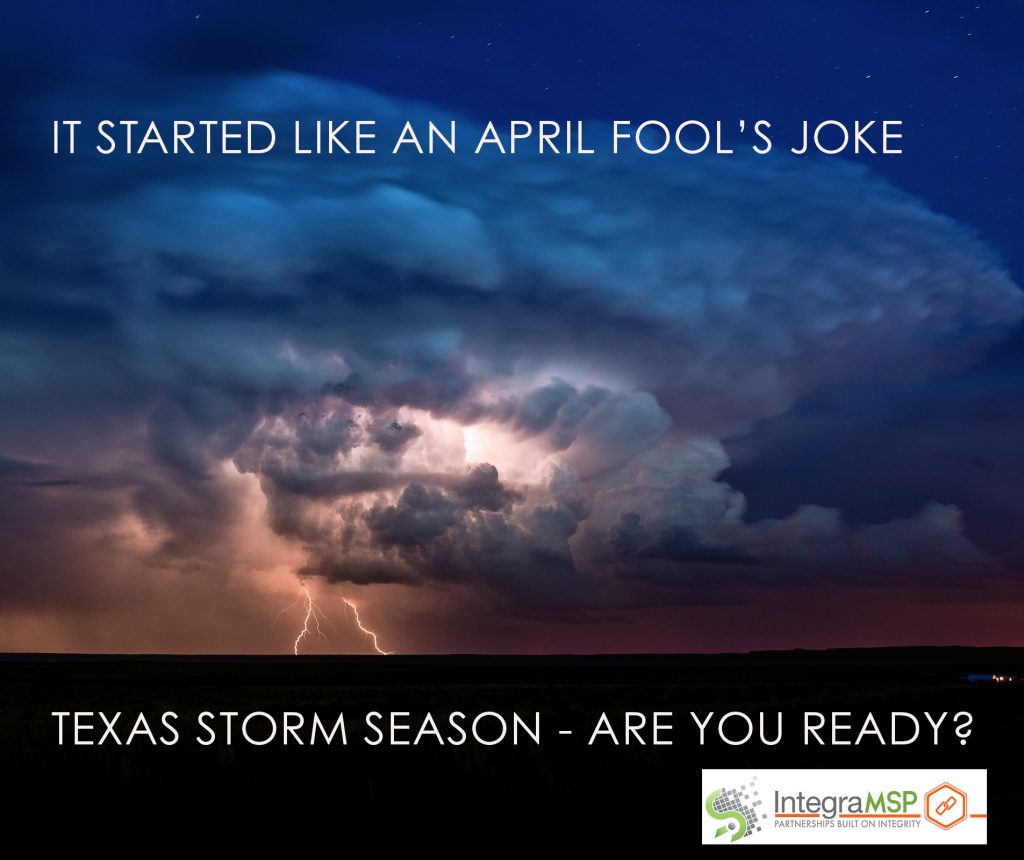
April in Texas has a reputation. It’s the time of year when the weather turns unpredictable—storms move in quickly, and tornado season ramps up across the parts of North Texas we serve. Around here, severe weather isn’t unusual; it’s part of doing business.
Which is why the message we received initially felt almost like an April Fool’s joke.
A client’s site had been hit by lightning—a direct strike that fried multiple components and sent damage through the rest of the network. The impact wasn’t subtle. The strike burned out critical infrastructure, including the router and firewall—nothing worked. Systems were inaccessible, the network was down, and the business lost visibility into nearly everything at once.
There was no gradual slowdown—work stopped immediately.
This is where most companies begin to feel the real cost—not because backups don’t exist, but because recovery hasn’t been fully thought through. In many environments, backups are in place, but they haven’t been tested in a way that reflects how the business actually operates. Restoration takes longer than expected, priorities aren’t always clear, and there’s no defined way for the team to continue working while systems are being brought back online.
That’s where downtime begins to spread beyond IT and into operations.
In this case, the outcome was different. Because the environment had been designed with recovery in mind—not just protection—we were able to spin their systems up in the cloud, restore from backup, and bring the environment live while the physical infrastructure was still being repaired. Their team was able to keep working while the underlying issues were addressed—the business didn’t stop.
In Texas, infrastructure will fail. Contingency planning is what determines whether your business recovers—or stalls. When something unexpected happens, the question isn’t whether backups exist; it’s how quickly systems can be recovered, and whether the business can continue to operate in the meantime.
Downtime doesn’t look expensive—until it is.
In Texas, especially this time of year, storms aren’t the surprise. What’s less common is being fully prepared for what happens after. Infrastructure matters, but contingency planning is what determines whether a business pauses—or keeps moving when something goes wrong.
Because when it does, it’s no longer theoretical. If you want to know if you can survive a lightning strike, tornado, or really ANY catastrophe, we can let you know if you are covered.