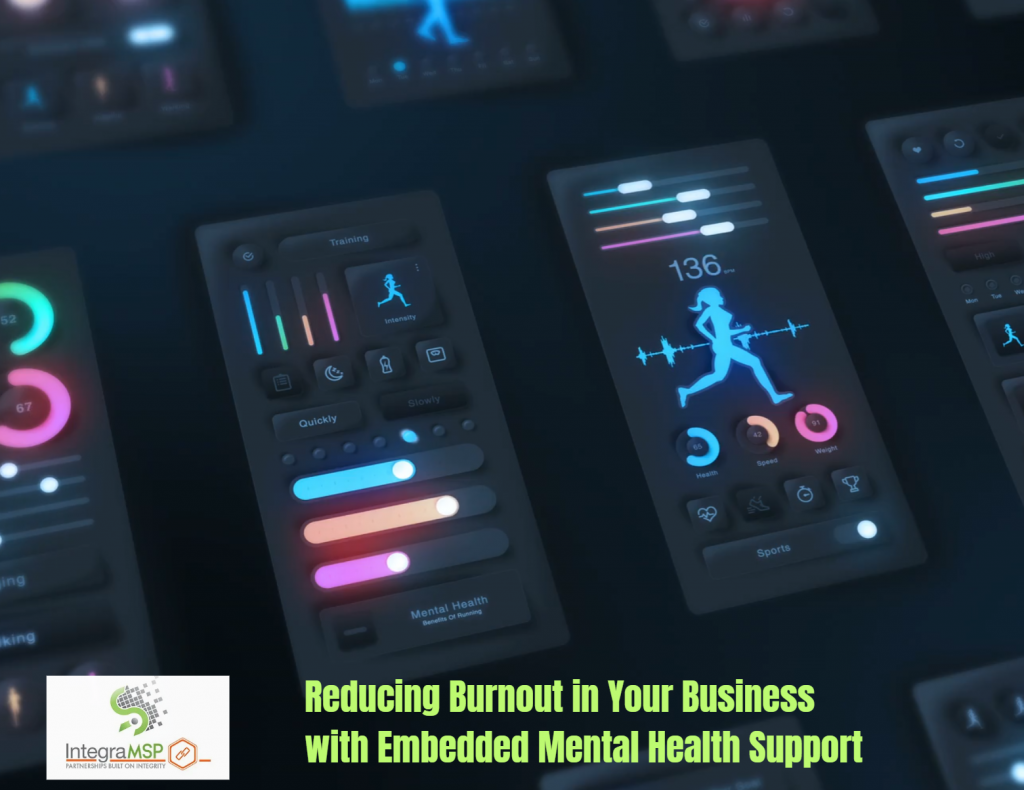
Running a business is stressful, even in good times. Owners carry decision fatigue, financial pressure, people management, and constant context switching, often with very little margin for rest or reflection. The reality is that many leaders know mental health support would be beneficial, but simply do not have the time or energy to pursue it in traditional ways. Embedded mental health tools change that dynamic. When support is integrated into calendars, wellness platforms, wearables, and workplace systems, it becomes more accessible and far less burdensome. Small signals, gentle check-ins, and early indicators can help leaders recognize when stress is building, rather than waiting until burnout forces a hard stop.
This shift does not just benefit ownership. It has a meaningful impact on teams as well. When mental health support is part of the everyday environment, it becomes normalized rather than stigmatized. Employees are more likely to engage with resources early, before stress turns into absenteeism, disengagement, or performance issues. Instead of reacting to missed work or declining productivity, organizations can support a more even-keeled workforce that feels seen and supported in real time.
For business leaders, the downstream effects are significant. Teams that feel balanced and supported tend to communicate better, collaborate more effectively, and recover from challenges faster. Reduced stigma around mental health often leads to fewer unplanned absences and lower turnover, both of which are costly and disruptive. When support is continuous rather than crisis-driven, productivity improves not because people are pushed harder, but because they are better equipped to manage stress and maintain focus.
Ultimately, embedding mental health support into daily life is about sustainability. It acknowledges that both leaders and teams are human, operating in environments that demand a lot of emotional and mental energy. By quietly integrating support into everyday systems, technology helps create workplaces where people can show up more consistently and with greater resilience. In 2026, this shift is less about adding another benefit and more about creating healthier rhythms of work, which is something both business owners and their teams can feel the difference from over time.
Additional Reading