By: Jennifer Gilligan, IntegraMSP President
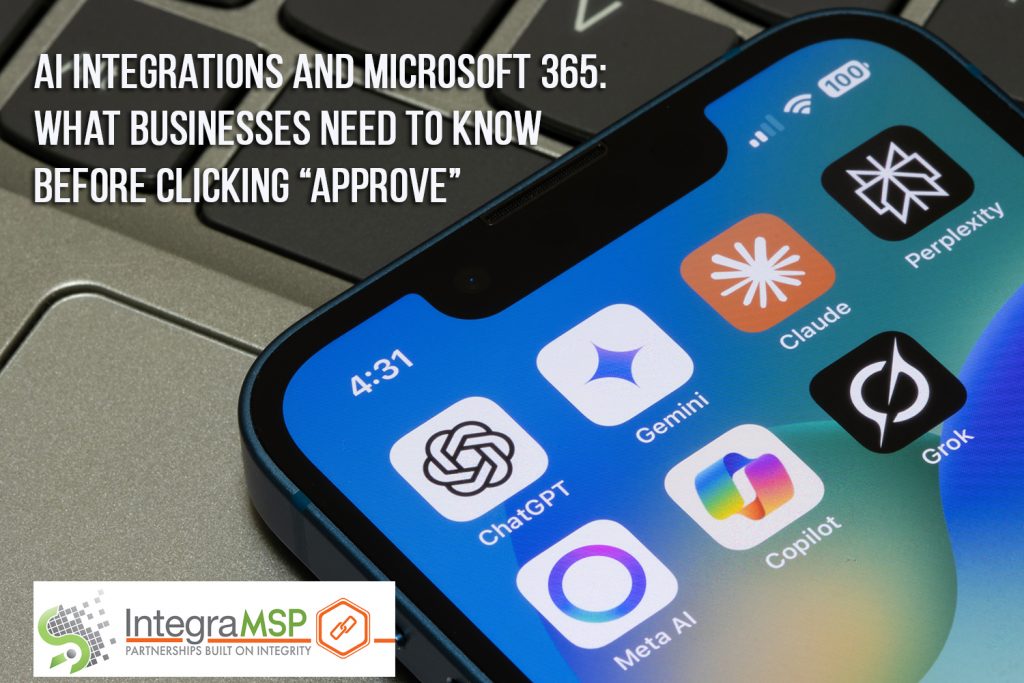
Over the last several weeks, we’ve seen an increase in clients receiving Microsoft prompts requesting approval for AI integrations connected to Microsoft 365 platforms. Many of these requests involve tools such as Claude, ChatGPT, Copilot extensions, document assistants, workflow automations, and other AI-powered productivity platforms.
In many cases, the request appears harmless — often presented as a simple “Allow Access” or “Admin Approval Required” notification. However, these integrations can grant third-party applications broad access to organizational data inside Microsoft 365 environments, including email, documents, Teams conversations, calendars, SharePoint files, and other business information.
As AI adoption accelerates, businesses are understandably looking for ways to improve productivity and efficiency. The challenge is that many organizations are being asked to make security and compliance decisions in real time, often without clear visibility into exactly what data is being accessed, where it is being processed, or how it may be stored and governed once access is approved.
Why This Matters
When a Microsoft 365 connector or integration is approved, the application may receive ongoing access to organizational data depending on the permissions granted during the consent process.
While some AI vendors maintain strong security standards, the core concern for many organizations — particularly legal, financial, healthcare, and regulated industries — is that business data may leave the organization’s native Microsoft 365 environment and be transmitted to a third-party platform for processing.
That raises several important questions:
- What information can the platform access?
- Is client or confidential data being transmitted externally?
- Where is the data processed or stored?
- Are there data residency implications?
- Does the integration align with the organization’s compliance obligations?
- Are users unintentionally exposing sensitive information through AI prompts?
For organizations with strict confidentiality requirements, these are not simply technical questions — they are operational, legal, and risk-management decisions.
The Growing Risk of “Shadow AI”
One trend we are seeing more frequently is what the industry now refers to as “Shadow AI” — employees independently connecting AI tools to business systems without centralized review or governance.
Because many integrations are easy to install and appear productivity-focused, users may not fully understand the level of access being granted when they click “Accept.” In some cases, even read-only access can expose sensitive client communications, internal documents, or proprietary business information to external processing environments.
This does not necessarily mean the tools themselves are malicious. In fact, many organizations will successfully and safely adopt AI technologies. The concern is whether the organization has performed the proper due diligence, implemented appropriate controls, and established clear governance around how these tools may be used.
Our Recommendation to Clients
At IntegraMSP, we are advising clients to approach AI integrations thoughtfully and strategically rather than approving requests by default.
Before authorizing any AI connector or third-party application within Microsoft 365, we recommend organizations evaluate:
- The exact permissions being requested
- Whether the platform processes or stores organizational data externally
- Vendor security and privacy documentation
- Compliance and confidentiality implications
- Data retention and residency policies
- Whether access can be restricted to specific users or datasets
- Internal acceptable-use policies surrounding AI tools
Where appropriate, we also recommend implementing Microsoft Entra consent restrictions, administrative approval workflows, and tighter application governance policies to reduce unnecessary exposure.
Innovation Requires Governance
AI tools are quickly becoming part of the modern workplace, and there are legitimate productivity benefits associated with many of these platforms. Our position is not that organizations should avoid AI — it is that adoption should occur with proper oversight, visibility, and risk evaluation.
As your technology partner, our role is to help clients navigate these decisions carefully, balancing innovation with security, compliance, and operational responsibility.
If your organization receives approval requests related to AI integrations, Microsoft 365 connectors, or third-party productivity tools and you are unsure how to proceed, our team is happy to review the request and provide guidance before access is granted.