By: Jennifer Gilligan, IntegraMSP President
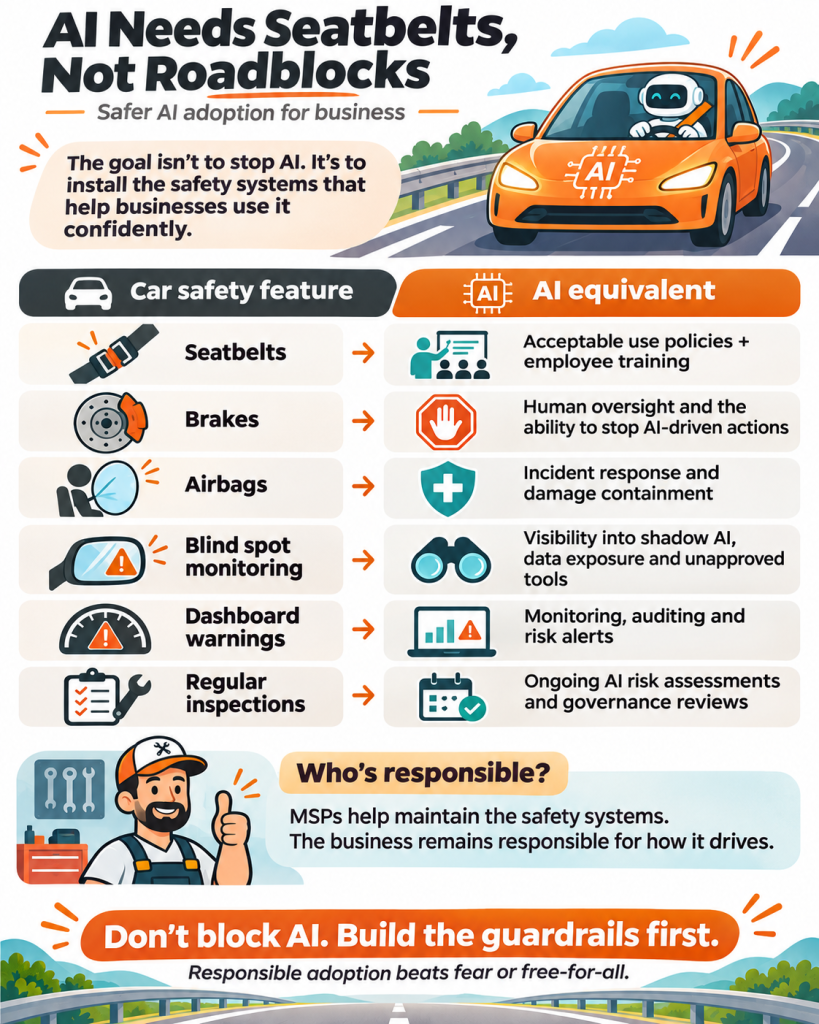
When automobiles first appeared, they were revolutionary. They also lacked many of the safety features we take for granted today. Over time, we developed seatbelts, airbags, better braking systems, and technology to help drivers recognize hazards. We didn't stop driving because cars presented risks. We learned how to make them safer.
I think we're at a similar point with artificial intelligence.
Businesses are embracing AI for good reason. The opportunities to improve productivity, efficiency, and decision-making are significant. But enthusiasm for the technology shouldn't outpace our understanding of how to use it responsibly. And that doesn't mean creating so many restrictions that innovation comes to a screeching halt. It means understanding where the brakes are. It means knowing what your employees are using, what information those tools can access, and when a human needs to remain behind the wheel.
Because adopting AI isn't just a technology decision. It's a business decision.
Business leaders don't need to become AI experts. But they do need to understand how the technology fits into their operations, where the potential risks exist, and what safeguards should be in place. The goal isn't to eliminate every risk. That's neither realistic nor how innovation works. It's to make informed decisions, establish reasonable protections, and give employees the confidence to use these tools effectively. After all, nobody considers seatbelts or airbags an obstacle to driving. They're part of what makes driving possible with greater confidence.
AI doesn't need more roadblocks. It needs better seatbelts.
The technology is already moving.
Let's make sure the safety systems are keeping up.